Community Corner
NJ Stroke Survivor's Nonprofit Links Affordable Housing, Ocean Conservation
After suffering a stroke, Kit Barnes is using his experience in real estate and marine research to create something larger than himself.


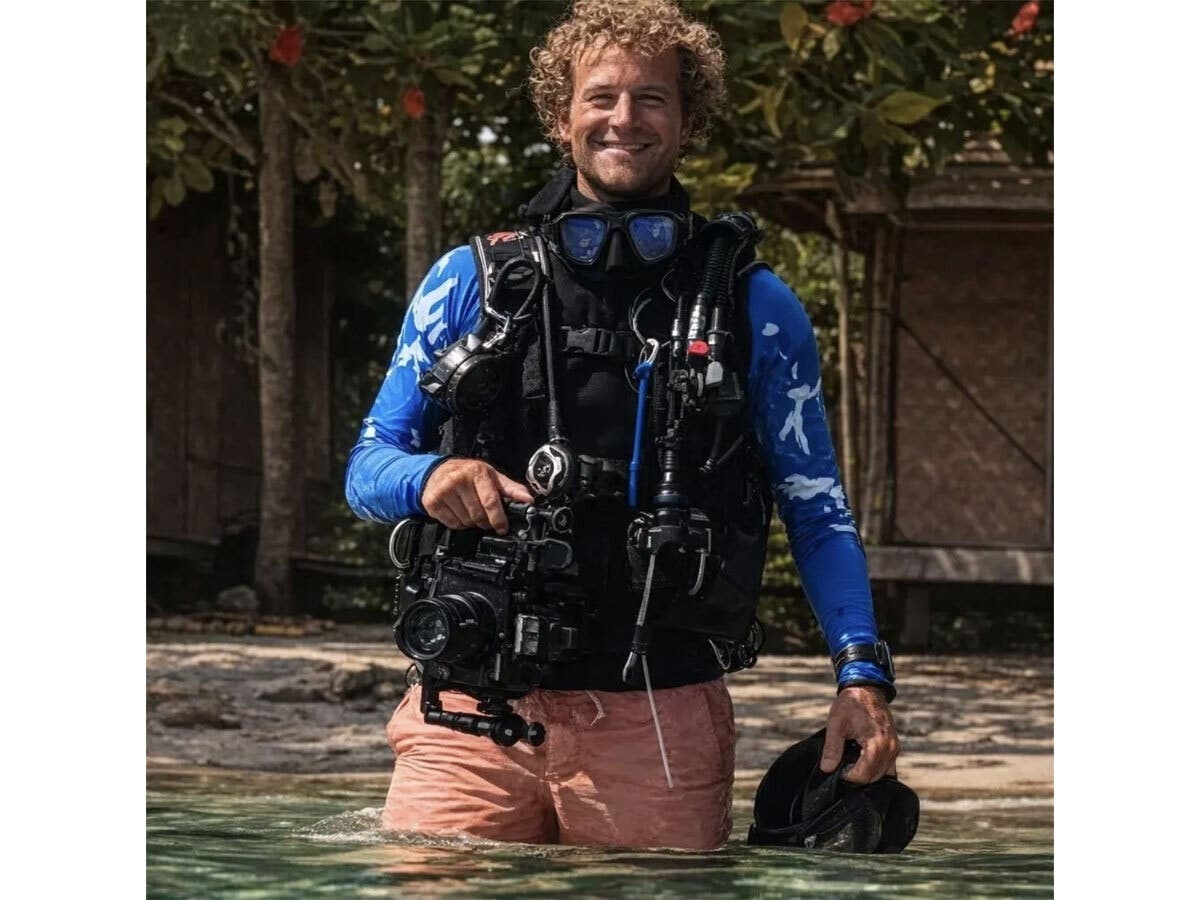
LONG VALLEY, NJ — Christopher “Kit” Barnes has seen many, many corners of the world. From studying orangutans in Borneo to SCUBA diving in the Philippines, he seemed to often find himself living life to the fullest.
It was when he found himself on the floor of a bathtub, suffering from a stroke, that everything changed.
Years before giving into his wanderlust, and even longer before the stroke, the Long Valley native spent his 20s working on Wall Street. In that time, he also had invested in an affordable housing property in Long Island.
Find out what's happening in Long Valleyfor free with the latest updates from Patch.
With some money saved up from his time on Wall Street and some steady cash coming in from his affordable housing investment, Barnes decided it was time for a change.
“My cousin was getting her PhD, studying orangutans, and I wrote her an email saying ‘I’m trying to change things up,'” he said. “I was making money off the low-income housing, which wasn’t a lot of money for one person, but… It was enough for me to survive in Southeast Asia without destroying my savings.”
Find out what's happening in Long Valleyfor free with the latest updates from Patch.
So, Barnes found himself in Borneo spending time with orangutans and enjoying the culture. It was there he met a friend from Hong Kong, China, with whom he’d travel to Komodo National Park to SCUBA dive.
It wasn’t long after that that Barnes found himself getting his dive master certification in the Philippines. He spent months there, strengthening his relationship with the sea, before deciding it was time to come home.
“It was cool, don’t get me wrong, but I was like, ‘I can’t just do this for the rest of my life, this is stupid. I’m 30 years old, it’s no way to live your life,'” Barnes told Patch. “I was like, ‘Alright, I’ll go back to school.’ I came back to the US, studied hard, and got into a better grad program than I thought I was going to.”
Barnes then spent years studying with Northeastern University Marine Science Center's "Three Seas" program, then down to Bocos del Toro with the Smithsonian Institute for Tropical Research, and the University of Washington Friday Harbor Laboratories in San Juan.
Now with a wealth of knowledge about the environment he loved, Barnes hopped around Asia and South America, participating in coral and marine life studies, and embarking on SCUBA diving business ventures.
Years later, just weeks before his 40th birthday, Barnes found himself back in the US for a conference. He was staying with his brother in Colorado when he suffered the unexpected stroke.
“I was in the shower at the time, a regular day, and all of a sudden I had a splitting headache. I was like, ‘Alright, this isn’t good,’” he said. “I started washing my hair and realized I couldn’t hold my hand up anymore.”
Barnes managed to crawl out of the bathtub and get the attention of his brother and sister-in-law, who immediately took him to the hospital. After six hours of brain surgery, Barnes learned that the stroke was caused by a ruptured AVM — a rare tangle of blood vessels in the brain.
“The cool thing was how lucky I am, because the months before that, I had spent three weeks in Raja Ampat SCUBA diving there, which is an incredibly remote place, and before that, I was in Alor, which is an even more remote place in Indonesia,” Barnes told Patch. “If this had literally happened almost anywhere else in the world, I would’ve been dead.”
Barnes said that his recovery is going smoothly, and he was able to be back in the ocean again less than a year after the stroke. He is, however, still adjusting to no longer being able to do everything he once could.
“I was one of, if not the, most capable people in the room. Whether it came to ‘You want to go SCUBA diving? Motorcycle riding? Camping? Hiking? Climbing? Skiing?’ Anything, I could do it,” he said. “You get used to having so many options, all of a sudden, I’m limited to just using what I learned in my life, using my brain. It’s like if someone tied your hands behind your back and said, ‘Alright, figure out a way to make money now.’”
That’s when Barnes decided to combine his experience in real estate and passion for the ocean to create something bigger than himself.
The Ocean Collaborative Foundation
This past February, Barnes and his colleagues Peter Bellard and David Hodgson launched the Ocean Collaborative Foundation, for which he serves as director.
What the nonprofit essentially does is build affordable housing for low-income families, and uses the rent and proceeds to fund oceanic conservation and research projects.
Specifically, the Ocean Collaborative Foundation will fix up rundown homes and properties, converting them into habitable low-income housing complexes using eco-friendly construction methods.
“I wanted to create an engine that could support research and things. I’ve been all over the world, and I know the hard work these guys and girls are doing, and the issue is… they all need money,” Barnes said. “Now, I can combine my passions into the Ocean Collaborative (Foundation.)
Currently, money raised by the Ocean Collaborative Foundation benefits the Institute for Marine Research in the Philippines and Islamorada Conservation and Restoration Education, two organizations Barnes has worked with in his career. Barnes intends to widen the network of beneficiaries as the Ocean Collaborative Foundation grows.
"Starting this foundation has played a tremendous role in my mental recovery, giving me a strong sense of purpose and the opportunity to connect with like-minded people," Barnes said. "I feel happy, strong, and excited to be in a position where I can help both people and the ocean build a more sustainable future."
To learn more about the Ocean Collaborative Foundation, Barnes’ mission, and how to donate to his cause, visit the nonprofit’s website here.
Those interested in the Ocean Collaborative Foundation can also reach out to Barnes directly at chris.fg.barnes@gmail.com.
"A founding donation to the Ocean Collaborative Foundation represents an extraordinary legacy opportunity, placing donors at the very beginning of a mission with the power to shape its future for decades to come. Unlike traditional giving, a founding contribution helps establish the vision, priorities, and long-term impact of the organization from its earliest stages. As oceans face urgent threats from pollution, climate change, and biodiversity loss, early support is critical in building the infrastructure and momentum needed to respond effectively. Founding donors are not only investing in ocean preservation—they are helping create a lasting institution dedicated to safeguarding marine ecosystems. In doing so, their name becomes closely associated with the foundation’s growth and achievements, permanently tied to its mission and the positive change it creates around the world and for all of the people that call earth home.
Beyond its environmental importance, a founding gift reflects bold leadership and a deep commitment to meaningful, forward-looking philanthropy. It signals a willingness to step forward at a pivotal moment, setting an example that can inspire others to join and amplify the cause. Founding donors often become part of the story itself, recognized as catalysts who helped turn vision into action. As the foundation expands its impact over time, its legacy grows alongside it—linking its name not only to generosity, but to measurable success and lasting global benefit. This type of legacy is not just about giving; it is about building something enduring, impactful, and transformative for generations to come."Kit Barnes
Get more local news delivered straight to your inbox. Sign up for free Patch newsletters and alerts.